Greek-Style Lemon Potatoes with Crisp Edges
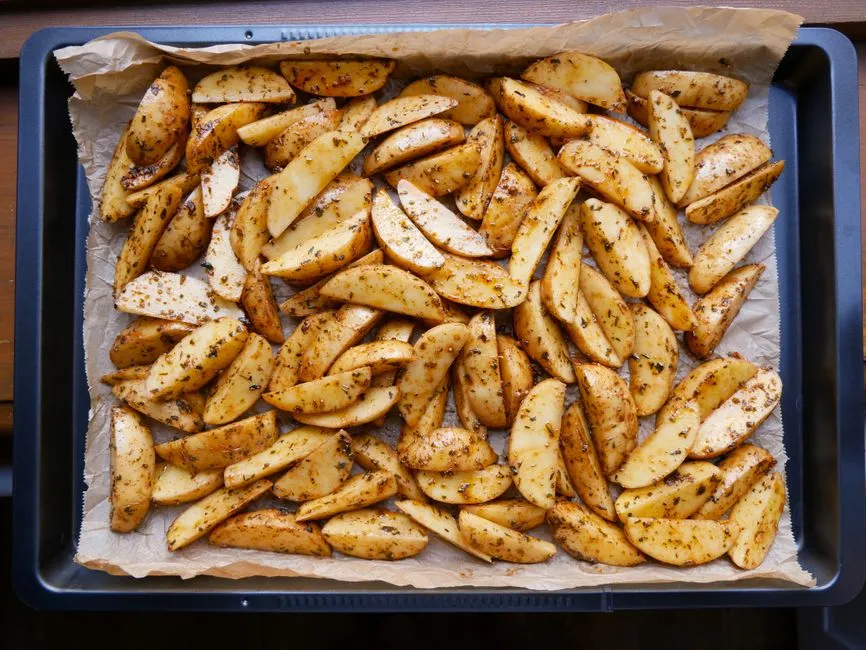
The method: braise first, brown second
These Greek-style lemon potatoes roast in olive oil, lemon juice, and stock until creamy inside, then finish as the liquid reduces and the exposed edges brown. The recipe is a practical home version, not a claim that every Greek household, island, or restaurant uses one ratio. Potatoes have survived regional disagreement before.
Use a metal roasting pan roughly 23 × 33 cm (9 × 13 inches). A crowded smaller dish slows evaporation; an oversized sheet pan can evaporate the liquid before the centers soften.
Yield: 4 generous or 6 side servings
Preparation: 15 minutes
Roasting: about 65 to 80 minutes
Oven: 220°C (425°F)
Ingredients
- 1.5 kg (3 lb 5 oz) Yukon Gold or other yellow potatoes
- 60 ml (1/4 cup) extra-virgin olive oil
- 80 ml (1/3 cup) fresh lemon juice, from about 2 medium lemons
- 240 ml (1 cup) low-sodium chicken or vegetable stock
- 4 garlic cloves, finely grated or minced
- 2 teaspoons dried oregano
- 1 1/2 teaspoons fine salt, reduced if the stock is salty
- 1/2 teaspoon black pepper
- 1 teaspoon finely grated lemon zest, optional
- 2 tablespoons chopped parsley or dill, optional finish
The roasting liquid totals 320 ml: 80 ml lemon juice + 240 ml stock = 320 ml. For six side servings, 1,500 g ÷ 6 = 250 g raw potato per serving before trimming and cooking. That is a planning figure, not nutrition advice.
Cut wedges of equal thickness
Scrub and dry the potatoes. Peel them or leave sound skins on according to preference. Cut each potato lengthwise into wedges about 3 cm (1 1/4 inches) thick at the widest edge. Halve very large potatoes first so the pieces fit the pan.
Uniform thickness matters more than identical length. Thin tips may brown early while thick centers remain firm, so trim extreme differences. Do not rinse away surface starch after cutting; a little starch helps the reduced liquid cling.
Heat the oven to 220°C (425°F) with a rack in the middle. The Celsius value is a practical rounded setting; use the control your oven provides.
Season directly in the pan
Whisk olive oil, lemon juice, stock, garlic, oregano, salt, pepper, and optional zest. Put the potatoes in the metal pan and pour the mixture over them. Turn every wedge to coat it, then arrange the pieces in one snug layer with a cut face down.
The liquid should sit around the potatoes rather than submerge them. If your pan is much larger than specified, transfer to a closer-fitting pan instead of adding unmeasured stock. Too much liquid postpones browning; too little can leave firm centers and scorched garlic.
Pair the finished side with our home chicken souvlaki when you want a complete grill-and-oven plan.
Roast, turn, and finish uncovered
Roast uncovered for 35 minutes. Carefully remove the pan and turn each wedge onto its other cut face. Spoon liquid from the pan over dry-looking surfaces.
Return the pan for 30 to 45 minutes. Begin checking at 30. The potatoes are ready when a thin knife slides through the thickest center with little resistance, most liquid has reduced to a glossy coating, and several edges are deeply golden. Oven calibration, potato variety, wedge size, pan material, and crowding all affect time.
If the centers are tender but the pan remains watery, move the wedges to a second clean tray or spread them farther apart, then roast briefly until browned. If the pan dries before the centers soften, add 30 ml (2 tablespoons) hot stock around—not over—the potatoes and continue. Add only measured increments.
For more pan-driven methods, browse oven recipes.
Balance the lemon at the end
Taste one wedge after it cools enough to handle. Lemon intensity changes with the fruit and stock. If it needs brightness, add 1 to 2 teaspoons fresh lemon juice over the entire pan, not another unmeasured pour. Add herbs immediately before serving.
If it tastes sharply acidic, do not hide that with sugar. Serve with a mild main or plain yogurt-based accompaniment and reduce the lemon slightly next time. The garlic and lemon residue at the bottom is concentrated; toss gently rather than scraping every dark bit onto one unlucky serving.
Coordinate with a main dish
Start the potatoes first. Prepare and refrigerate chicken in its marinade while the potatoes roast. When the wedges have been turned, preheat the grill and thread the skewers on a separate raw-work surface. Cook the chicken during the potatoes' final 15 minutes, using its temperature—not the shared schedule—as the endpoint.
Keep raw chicken, utensils, and marinade away from the potato pan and serving platter. See grill and skewer for the full separation routine.
Store and reheat leftovers
Refrigerate leftovers in a shallow covered container within 2 hours. Use within the current authoritative leftover window that applies where you live; USDA general guidance is 3 to 4 days at 40°F (4.4°C) or below. Reheat until steaming hot throughout, following local guidance.
For better edges, spread potatoes on a lightly oiled metal tray and reheat in a hot oven rather than a crowded microwave container. Add fresh lemon only after reheating. The first-day crust will soften in storage, but the potatoes should still taste like dinner, not a citrus-flavored apology.