Chicken Souvlaki at Home: A Reliable Method
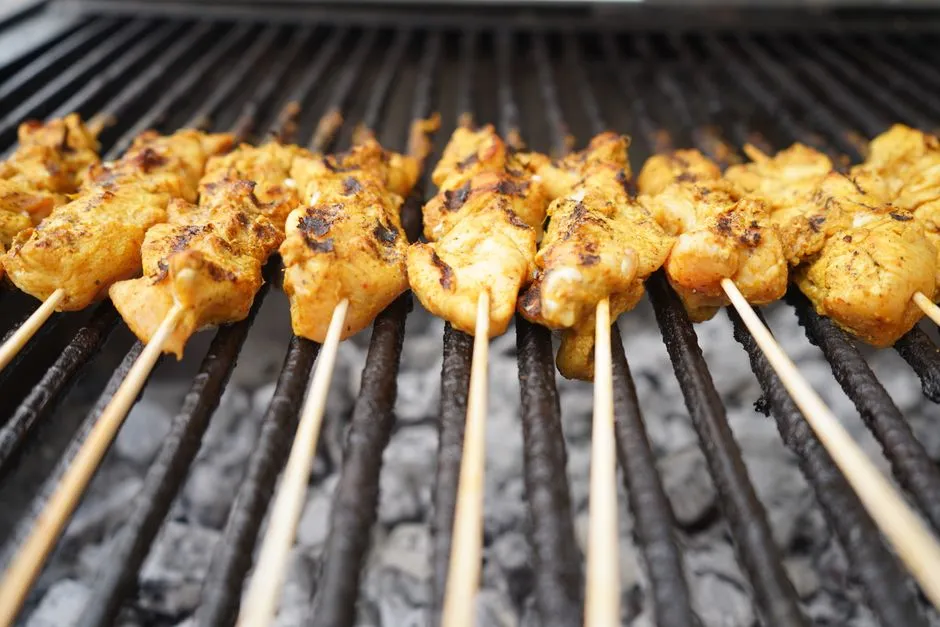
Use even pieces and a short lemon marinade
This home chicken souvlaki uses boneless thigh meat, lemon, olive oil, garlic, and oregano. Souvlaki traditions and seasonings vary; this is a reliable grill method, not a declaration that one marinade owns the name.
Thighs tolerate high heat and stay juicy, but they still need a thermometer. Grill time is an estimate. The safe endpoint is 74°C (165°F) in every piece.
Yield: 4 main servings
Preparation: 20 minutes
Marinating: 30 minutes to 4 hours, refrigerated
Grilling: about 10 to 14 minutes
Ingredients
- 900 g (2 lb) boneless, skinless chicken thighs
- 45 ml (3 tablespoons) extra-virgin olive oil
- 45 ml (3 tablespoons) fresh lemon juice
- 4 garlic cloves, finely grated
- 2 teaspoons dried oregano
- 1 1/2 teaspoons fine salt
- 1/2 teaspoon black pepper
- 1 teaspoon finely grated lemon zest, optional
- neutral oil for the grate, as appropriate for the grill
- lemon wedges and chopped parsley, for serving
The marinade contains equal measured volumes of oil and lemon juice: 45 ml + 45 ml = 90 ml before garlic and seasoning. Four servings divide 900 g raw chicken into 225 g each before cooking loss. Adjust serving size for appetite; that arithmetic is not individualized nutrition advice.
Use flat metal skewers when available. If using wooden skewers, follow their package and grill guidance; soaking may reduce scorching but does not make exposed wood fireproof.
Separate raw work before cutting
Clear the sink and counter. Set aside a clean serving platter, clean thermometer, and clean tongs away from the raw-chicken area. Wash hands before and after handling poultry. Do not rinse raw chicken; splashing can spread contamination.
Trim large loose pieces of fat and cut the thighs into pieces about 2.5 to 3 cm (1 to 1 1/4 inches). Keep them as even as practical so small pieces do not dry out while large ones remain undercooked.
Mix olive oil, lemon juice, garlic, oregano, salt, pepper, and optional zest in a nonreactive bowl or food-safe bag. Add chicken and coat thoroughly. Cover and refrigerate for 30 minutes to 4 hours. Do not marinate on the counter.
USDA permits longer refrigerated poultry marination, but a lemon-heavy mixture can change texture; this recipe's shorter window is a quality choice. USDA's poultry marinating guidance also confirms the 165°F endpoint.
Preheat a two-zone grill
Heat a clean grill to medium-high, creating a hotter side and a cooler side where possible. Scrape the grate and oil it using a safe method suitable for your grill. Keep loose sleeves, paper, and excess marinade away from flame.
Remove chicken from the marinade and let excess drip back into the raw container. Thread pieces snugly but without compressing them into a solid log; leave tiny gaps where the skewer shape permits heat to circulate. Divide the meat evenly across four large or several smaller skewers.
Discard the raw marinade. Do not brush it onto cooked chicken unless it has been brought to a full boil under authoritative guidance; the simpler choice here is to discard it and use fresh lemon at the table.
Browse grill and skewer methods for fire setup and safe tool changes.
Grill to temperature, not color
Place the skewers over the hotter zone. Grill for about 3 minutes, turn, and continue turning every 2 to 3 minutes until browned on several sides. Move skewers to the cooler zone if drips cause sustained flare-ups or the exterior darkens before the center cooks.
Begin checking around 9 minutes. Insert a clean instant-read thermometer into the thickest pieces from the side so the sensing area reaches the center without touching the skewer. Check pieces in different positions because grill heat is uneven.
Every piece must reach at least 74°C (165°F), the USDA minimum for poultry. Color, firmness, clear juices, and grill marks cannot verify safety. Total time may be roughly 10 to 14 minutes, but piece size, starting temperature, grill output, lid position, weather, and skewer load all change it.
Transfer finished skewers with clean tongs to the clean platter. Never return them to the raw tray.
Rest briefly and serve
Rest for 3 to 5 minutes. This is for handling and juice distribution; it does not replace reaching the safe temperature. Add lemon wedges and parsley at the table.
Serve with Greek-style lemon potatoes, a tomato-cucumber salad, warm pita, or plain yogurt sauce. Keep cold accompaniments refrigerated until serving and use separate utensils. If making a cucumber-yogurt sauce, follow the yogurt's date and refrigeration instructions rather than assuming acidity grants diplomatic immunity.
Explore oven dishes if outdoor grilling is impractical. The skewers can be cooked under a broiler on equipment approved for that use, turned carefully, and checked to the same 165°F endpoint; timing will differ. Keep handles and wooden skewers away from the broiler element.
Store leftovers safely
Refrigerate cooked chicken in a shallow covered container within 2 hours, or within 1 hour when ambient temperature is above 32.2°C (90°F). USDA general guidance uses cooked poultry leftovers within 3 to 4 refrigerated days. Freeze earlier when needed.
Reheat leftovers to 74°C (165°F) throughout. Remove chicken from metal skewers before microwave reheating. Add moisture with a spoonful of water or fresh sauce after heating rather than saving raw marinade.
Discard chicken when time or temperature history is uncertain. A smoky aroma is lovely; it is not a storage log.